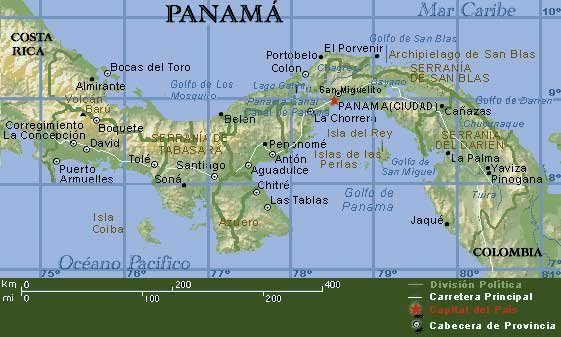
April and Kevin in Kuna Yala, the northeast coast of Panamá
Showing posts with label Work projects. Show all posts

Friday, June 19, 2009

Grand Opening for the Island Library

It happened!

La Biblioteca (the library) is open! As you may recall, the community had made plans to make bookcases and organize books. Well, the chainsaw never worked out (due to a lack of gas and/or oil and/or machine), and bookshelves never got built. But, there was a spare bookcase from the kitchen in the school, and they decided it would work fine for the library and they would replace it when the chainsaw happened.

So, as scheduled, on 5 June Cecilia and her husband Eduardo brought their boat to our cove and we loaded up the six "Panama" bags we had filled with the books stored at our house and hauled them to the school. We organized them that day and the next with Cecilia and Maria Luisa into little kids (thick pages), easy reads, medium reads, chapter books, Panama information, science and education books, health books, books about adolescence, and English or Spanish books. We confirmed the plans for the checkout system and library hours. They talked to everyone about the Grand Opening on Tuesday, 9 June, and we actually left for the weekend, arriving back on Tuesday morning.

It turned out that Cecilia and Maria Luisa, together with the maestra, were up to a bit more than the Grand Opening of the Library. The maestra had organized all the kids in the school to sing a song or recite a poem for us, and they had a going-away lunch.

Then we had everyone wash their hands (manos limpias para los libros - clean hands for the books) and we held a story time to celebrate. We had all the kids, plus some younger siblings, and numerous parents. I read one of the Guillermo Gusano / William Worm books that the kids have enjoyed. I think it was a good example for the parents of how to read to the kids.

Then April went over the rules of the library and how to treat books well so they last. (And to think, I was librarian's child. :)
(April reviewing the rules of the library, on the whiteboard and posted on the wall. Together with a map of the world - we later added a map of the Gulf of Montijo and one of the island - it looks pretty official. The books nearly fill the bookcase already; they are planning on making another one.)

After the rules, April read them a book we hadn't read in nearly exactly a year, Donde Viven Los Monstruos.
(April with a very attentive crowd of listeners as Max sails back home)

When the wild rumpus started, April shocked them to their feet to dance around, while I joined in banging on a plastic bucket. They thoroughly enjoyed story time, and hopefully Cecilia, who will host the Wednesday Library Hours with Story Time, will carry on the enjoyment. (Maria Luisa will hold Sunday Library Hours.)

But while we do hope Story Time continues, one of our main goals is to encourage kids and adults to read in general. We hope to have something for everyone.
(Rubiel, Carlito, and Kiko reading, while Roxanna and Soray look at books and talk with April)
Thus, this picture is one of the ones we enjoyed the most. These three boys all clambored to find a small book and sat down to read it. Kiko lives north of us and had been by our house regularly on his way home from school to ask for a book to read, and searched out his favorites. Rubiel lives on the south of the island and Carlos near the school, so they had not read any of the books before, and enjoyed discovering the options. I have faith that they will continue to read in the future.
So what came of the donations, which were originally intended for sealable boxes and desecant packs? Since the community decided the books would be more accessable on a bookcase, and donated the bookcase, April searched around online and found another addition to the library that they had wanted: an encyclopedia, to support homework projects and learning. She found one from Encyclopedea Brittanica for $250 (plus $50 S&H once we got an Embassy address; originally, to ship to Panama was $250 as well!) with 20 volumes, aimed at the middle school age range, so it should provide as much as they need. We just spent the rest of the money yesterday at Hombre de la Mancha, one of the few bookstores in Panama (the name comes from Don Quixote, not only one of the greatest Spanish-language novels, but an appropriate label for the jousting at windmills that is selling books in Panama), picking up the fourth Harry Potter, a set of 12 books on nature, the world, and science, and other kids books. In total, the library now has nearly 400 books! Thanks to all of you who shared your love of reading and your willingness to help with our community members!

Sunday, May 24, 2009

Off to Coiba!

Just a quick update....

I (April) am off to Coiba National Park today to teach a Certified Interpretive Guide course with park rangers there. In this case interpretation means interpretation of a history, resource or other story....such as guided hikes that our National Park Rangers do in the States...they help you interpret what is unique and important about what you are seeing/experiencing. The training will be an official course within the curriculum of National Association of Interpretation. (See their webpage at http://interpnet.com/ to learn more about interpretation as a profession and a skill set.)

As my parents have heard... I originally proposed this week long class last February. I wrote the proposal three times before it was accepted (English, Spanish, and official government format Spanish). The course has been postponed twice...once in November due to a broken electric generator and again last month for unknown reasons (internal agency confusion seems likely on that one :)

The funding has come from the national environmental agency ANAM and all of the students are ANAM employees. All told we hope to have representatives from 7 different Panamanian parks in attendance. I even have a wonderful co-instructor to share the work with...Eylin Martinez is a Panamanian who also holds the certification from the National Association of Interpretation. I am so lucky that she is donating her time and efforts to this workshop...she brings a great point of view, excellent Spanish and a cheery disposition. All in all she is quite likely to be the main reason I survive the week with any sanity. Thank you Eilyn!!!

So, off I go to fix up the last minute details and make the last of the copies needed. I will post later about how the class went...with photos of course. If I get lucky I may even get in some snorkeling time...I am taking my gear just in case.

Monday, May 18, 2009

Update on Library Progress

Wow. Early on in our service, experienced volunteers warned us that the first year would be getting used to the community and the community getting used to you, and you talking about ideas and projects and ways of doing things, but not actually doing any of them. Then in the second year, things would start happening, and your community members would start implementing a few of the ideas you had talked about. Finally, in the final few months, your community would realize you were leaving soon and want to implement all of the ideas you had ever talked about, all at once (okay, maybe not all, but more than you have time to accomplish; maybe that's why they do follow-up volunteers).

Well, it isn't quite like that, but we've certainly seen an uptick in organized scheduling of activities. Last Sunday, we had a community meeting about the library, to discuss where to house it and how to use it. Attendance was limited, but with Cecilia and Maria Luisa (two of our host moms and community leaders) there, it was very productive, and they decided to talk more about it on Wednesday at a Padres de Familia meeting at the school. They assigned each person (well, everyone but us, which was a pleasant surprise) at the Sunday meeting a section of the island to alert about the Wednesday meeting. It was amazing how quickly the word got around; I left site Monday and was asked Monday afternoon about the meeting.

On Wednesday, we had 27 people at the meeting at the school, including the maestra. Cecilia led the discussion and guided them through deciding where to store the books and how to make the books accessible to the community. It was amazing, organized, and productive.

(One of the best parts about this meeting? April and I understood about 97% of the conversation, even when multiple people were talking. What a change from our first Padres meeting we attended!)

The current plan is on 21 May, they'll use a chainsaw to make planks out of a tree that is already down on the school property, which is where they intend to house the library until they can build it its own house off school property. Then on 23 May, they will have a junta (work party) to build bookshelves, which they decided on in the meeting as the best way to make the books visible and upright with spines readable.

On 5 June (April will be gone a week in the midst of that to teach a course at Isla Coiba National Park, a UNESCO World Heritage Site), they will transport all the books to the school, organize them. And we will discuss amongst the volunteers interested what hours it will be open. (Transporting and organizing the books will be a hefty effort. Between the books we have and the books Cecilia has from a Club de Leones - Lions Club - donation, there are probably 10 or 11 ft of books, around 300, from thin kids books like Dora the Explorer, to the first three Harry Potter's, to thick health books, like Donde No Hay Doctor - Where There is No Doctor - and Qué Se Puede Esperar Cuando Se Está Esperando - What to Expect When You're Expecting.)

Finally, on 9 June (si Dios quiere - God willing), they will have an Opening Party to open the library to the community, announce office hours, and demonstrate the check out procedure, which was the other part of the library discussion at the meeting. After much consideration and discussion on the relative merits of protecting the books by not allowing them to leave the room versus giving people the chance to read at their leisure and to their kids by allowing them to take them home, as well as how to plan for replacements of damaged books, they decided:

  • Adults only may check out books;
  • Two weeks is the check-out period;
  • No deposit is necessary to check out a book;
  • One book at a time;
  • Privledges will be suspended if you destroy a book;
  • Renewals are allowed, but you must bring the book back to request checking it out again
So it sounds like a lot of work in the time remaining, but it also sounds well thought-out and do-able.

But the other big topic of discussion during the meeting was the interest in making an Estufa Lorena at the school. So, overlapped with that schedule of events for the library, they intend to modify the table in the kitchen, collect materials, and build an Estufa. After two years encouraging the construction of a school estufa, it is thrilling that they are going to do it, but we really wish they would have decided this a few months ago.

So now we're talking about a lot of work in the time remaining. Maybe those experienced volunteers were right. We'll be sure to warn the newbies on what to expect.

Thursday, April 30, 2009

Library Fully Funded

Well, one can always use more money! However, our Partnership grant for the community library has been completely funded through donations. This means that the money will arrive soon into our hands so that we can start using it.

THANK YOU!!

Thank you to one and all who donated! We don't know who most of you are, but thank you from both of us and our community. We will now start looking for a way to store the books that will best protect them from all of Panama's challenges. We will be sure to post a blog with photos of the finished library and the opening day for you all to enjoy.

(And if you still want to help some other Peace Corps Volunteer with a project, check out the full list of projects in need of assistance.)

Thursday, April 23, 2009

Thank You Donars!

Hello,

I just wanted to post a quick note thanking all those who have donated to our Peace Corps Partnership Grant for the community library. (If you don’t remember what I am talking about check it out: Community library post). The total donations have brought our amount needed down to just $175!!

One of the reasons that I wanted to say thank you is because unless you give Peace Corps specific permission to tell us who you are during the donation process (which I have been told means checking some obscure box in the forms) we never find out who gave money. We want all those who have given to know that we appreciate your help...as do the people in our community; we may just not know who you are to say it personally.

If you have not yet donated and still want to...there is still a bit left to be given. You can check it out at: Community Library donations

Last night, by phone, Kevin told me that our library now fills the shelf alloted for it...a shelf that is about 6 feet long. That is a lot of books especially when you consider how many of them are thin childrens books. Poco a poco. (little by little)

Monday, April 13, 2009

Isla Library Needs You!


That was our library of Spanish-language books for loaning about two months ago. It includes thick-page kids books on numbers and shapes, National Geographic en Español, kids encyclopedias and books of science questions, big books of fairy tales, why-things-are and how-things-work books, loads of books from Piggy Press (they do books in English and Spanish, and April bought nearly one of everything they have, around 50 books, a year ago), and Harry Potter 1, 2, & 3. Since then, between April's needs to buy more fun books for the kids and the books we bought with the Health Fair funds, it has more than doubled.

But we need your help.

If you have wondered how you could send something to us for our community, now is your chance. (Or, if you are about to file your taxes and were looking for one last opportunity to make a tax-deductible donation, now is your chance.) Through the Peace Corps Partnership Program (PCPP), friends, family, and others in the United States can make tax-deductible donations to projects sponsored by Peace Corps Volunteers. All projects must have 25% of the cost provided by the community; that can include cash, materials, labor, etc. Ours has a 46% community match.

The summary page for our request summarizes the project, indicates the amount we still need (we started at $525 and have already received $50 as I write this on Easter Sunday; thank you to someone!), and provides a space to make a secure on-line donation.

We already have a lot of books, thanks to April's insatiable appetite everytime she passes the few bookstores in Panama (let's just say that we may have skewed the recent Volunteer Living Allowance Survey with the percentage of allowance spent on "Items for Community Projects" sometimes 1/3 of her salary) and thanks to books brought or sent by family and friends from the states. But of course we want to provide more options to our young (and old) readers.

We also want to purchase some sealable and lockable plastic containers for book storage, along with reusable desecant packs, to help protect from damp, mold, mildew and insects.

Already, we have held several fundraisers with our community members, and we have one more big one planned for the national election (Sunday, 3 May), when many families will have all their members together for the vote (many folks vote where they were born). We plan to take, print, and frame family pictures, something very few families have, and sell them for a slight profit to support this library project.

We will also work with the community members to establish a plan for tracking books as they are checked out and returned, "office hours", holding story times, and expanding the library in the future. We will also talk with parents about the importance of reading with their children, so that it becomes a multi-generational together time.

Please help us encourage more moments like Dianeth, a twelve-year-old friend, reading fairy tales like the Steadfast Tin Solider or Rumplestiltskin to Nina, our four-year-old neighbor. Or moments like when Nina's dad, Julian, comes by on his last trip of the evening from his boat in the cove near our house and asks to borrow a book to read to Nina and his other kids that night.

(Our request amount is rather small, and once the requested amount has been donated, I think they will close the donation option for this project. But if you'd like to support other similar programs in Panama (at the main donation page, select Panama in the Country of Service dropdown and then check the list at the bottom of the page) or around the world with other PCVs, you can. Projects range from small community libraries or gardens to large computer centers or community sports fields. Take your pick of what you'd like to support!)

Friday, April 3, 2009

A healthy success!

Gulf of Montijo Health Fair was a healthy success!

An end of the day photo when everyone was tired but happy.


Educar es luchar (to educate is to fight) is the slogan for the fight against AIDS and HIV here in Peace Corps Panama. Panamá has one of the fastest growing infections rates of AIDS in Latin America. Peace Corps Panama received PEPFAR (President's Emergency Plan For AIDS Relief, a Pres. Bush II project of about $15B I think) funds to run educational programs about AIDS/HIV and uses it to award grants of up to $1000 per Peace Corps Volunteer to do programs in their local community.

Kevin and I partnered to put on a Health Fair in our community. Three Panamanian agencies came out to participate in the teaching of charlas (lessons), and the assistent at our local health post on the island gave on charla and supplied materials for two others, an inspiring measure of local support. We also put out an open call to our fellow PCVs for their help (hey this was a great chance for them to visit like they have said they wanted to do for over a year!).

We invited, via a Radio Veraguas announcement, people from all over the Gulf of Montijo. We also went visiting house to house with invitations for our community members. Three communities attended...including attendance from every part of our island community. Actual registered attendance was 118 adults and children...but we know that there were a handful of participants or "window lurkers" who did not sign in.

Laura and Emily working at the sign in table.

The event was held at the school, with the permission of MEDUCA (the national education agency). When participants arrived they signed in and received a slip of paper with their number repeated on the slip 7 times to use in the tumbolas (raffle drawings).

The table of classes offered.

Participants then went to pick a charla to attend. There were four classrooms each with a different lesson going on every hour. Each lesson was given twice so there were two opportunities to go to it. Participants could choose to attend any lesson offered at the moment. Lessons included:

  • HIV/AIDS info
  • Women's health
  • The importance of vaccinations for the family
  • First Aid in the house
  • Disaster response
  • Domestic violence
  • Nutrition
  • The Risks of Alcohol
  • The Risks of early pregancy
  • Family Planning
  • Dental Health

The idea was to offer a variety of themes while maintaining a strong focus on issues related to sexual health. We wanted to encourage participants to focus more on their own sexual health and to be more comfortable dealing with these topics. Building personal comfort is a move towards eliminating the aura of avoidance and secracy that abounds with sexual topics and provides opportunity for the continued spread of AIDS.

The classes had hands on activities where possible. Above the participants are praciticing reading nutricion labels with the help of Stephanie. One of the most popular demonstrations and practice activities of the day was condom use...on an unripe banana.

Teri teaching women's health. She taught about breast self exams, pap smear tests, and other sexual health topics.

Jim and Robby show an example of a menstral cycle and how it relates to fertility.

Robby and Jim took on the teaching of Family Planning. Their interest and willingness to teach this subject helps women to know that men can be knowlegeable and involved in the family planning process. Family planning was a popular class, and the cooks for the day planned specifically to be available to go to this class.

April teaching how to brush your teeth with her helpers ready to demonstrate.

I taught dental health and had a couple of kids come to both sessions even though they knew it was the same class. We started by eating a cookie and then looking in a mirror to see how much cookie sticks around in your teeth. The kids were very helpful in demonstrating how to brush your teeth, and they also got to take their toothbrush home. We all also flossed two teeth and got to see models of teeth.

A kid selecting a raffle ticket for the Red Cross after their class.

At the beginning of each lesson, participants put one of their numbered slips of paper in the paper bag for that class. After the lesson, the instuctors pulled numbers from the bag and used it for a raffle for small prizes. Prizes were mostly healthy things like toothpaste, toothbrushes, floss, Panamanian flags, and seeds for the garden. People in our commuity love raffels and prizes. (And we were able to collect the bags afterward and know how many people attended each charla, and if they were men, women, young adults, or children, by comparing the numbers in the bag back to the sign-in sheet.)

One of the bigger jobs of the day was cooking for everyone. We made a deal with the Padres de la Familia president (and a good friend of ours) Cecilia, that if the Padres cooked (well, really the madres) we would "pay" for the service with much needed new plates, cups, and spoons for the school. This not only benifited the whole community, it also meant that with some washing of dishes, we were able to feed everyone and not use any disposable dishes...less trash!! The cooks also took turns going to classes...and even were so organized that while waiting for the rice to finish cooking they locked up the kitchen and all went to a class.

Seven PCVs came out to lend support and teach classes. We could not have done it smoothly without them and would have offered only 1/2 as many classes. A big THANK YOU to Stephanie, Teri, Jim, Robby, Lee, Emily and Laura for your help at the Health Fair!

We came in under budget and so spent the extra money on Health related books for our growing library for our community. With a bit of a discount from the book stores in Panama city we were able to buy quite a few books. Our collection is really starting to look like a library.
Other examples of programs put on with these grants include traveling lessons similar to ours to visit remote indiginous communities (whose inhabitants are at risk of HIV when some community members leave and return from migrant farmer work). Also, on April 30th the first known Panama production of the Vagina Monologues will take place in Santiago, preceded by a day of lessons and round tables for women on women's issues and AIDS.

Monday, March 16, 2009

Visit to Demonstration Farm (and the biggest lemon I've ever seen)

Back in December, MIDA, the Ministry of Agricultural Development, brought Dario, the owner of a finca de difusion de tecnologia, or demonstration farm, to the island to talk to some of the cattlemen about methods he'd implemented with the guidance of the MIDA tecnicos (extension agents).

I arranged a visit on 20 January to Dario's finca on the mainland so the island cattlemen could see firsthand how he was doing things. They also scored some seeds for the biggest lemon I've ever seen.


(Like all good government projects, there is a sign to explain how the money is being spent)


It turned out only three of the cattlemen were interested and able to go that day, but that was a good number, as they could see everything easily and ask questions without hiding quietly in a crowd. We started just outside his house, where his wife (who is very involved in the farm; they both made the point that it is a family farm and family effort) explained their data keeping methods and financial recording, and why it is important.

That is not something many small farmers think about, the full cost of items from the start to the end; there are stories of farmers selling their crop or animals and thinking they've made a big profit because it is much more than they paid for the seeds or baby animals, but they have never calculated in the intermediate costs of time, fertilizers or food, pesticides or vaccines, or other supplies, and in reality, they are lost money on the deal. It seems most of the larger cattlemen on the island are making money, but they may not be tracking their costs to know how much.


(The group in front of Dario's house, minus Dario. His wife (blue shirt) and two sons (red stripe and black shirts), with Maria de Yepez from MIDA, talked about bookkeeping and family farming.)

Then Dario came back and we headed out into the fields to look at the grasses and other plants he grows to feed the cattle, how he has sub-divided his pasture land to rotate the cattle, and the trees and other products he has incorporated into his farm planning.


(Alex, from the island, walking through a plot of buton de oro, which grows about eight feet tall, has pretty flowers, and is an important component of the silage they produce)

We walked past some other examples of sustainable agriculture as well, including several varieties of compost piles.
(Pedro, from the island, Maria de Yepez, and Dario, talking about compost)
The part that was of primary interest to the cattlemen however, was the chipper/shredder. Dario had talked about making ensilaje, or silage, which is a mix of plants that provide good food for the cattle, and the cattlemen wanted to know more about how hard and how expensive it was. They were surprised at the size (smaller than expected) and the fact that it ran on gas (they'd presumed electricity, since Dario had electricity, which would have ruled it out for them), as well as how easily and quickly it would chop up buton de oro and caña de azucar (sugar cane).

(Julio, who also owns the upper tienda on the island, feeds sugar cane and buton de oro into the chipper shredder)

Julio currently cuts up sugar cane by hand with a machete to feed his cattle, a process he felt was fairly easy. His mind might have been changed by trying out the chipper/shredder.

By all accounts, it was a worthwhile and enlightening trip for the cattlemen from the island and several of them said they intend to implement some of the process they'd observed. Now I just need to follow up with them occasionally to help it happen and encourage them to share what they learn with others on the island.

By late morning, we returned to port. While grabbing lunch before the return boat ride (yes, out and back in one day; while rare, it is possible, especially if you plan it and go with the capitan, who in this case was Pedro), I watched the TV in the restaurant, which for a while was on a live feed of the Presidential Inauguration from the US; as April said, I cried for the national anthem.

Oh, and if you read through all this just to see a picture of the biggest lemon I've ever seen, here you go:

(Pedro, holding up the lemon from Dario's farm that he is going to bring home and collect seeds from to try to grow his own; he told me later it made good lemonaid)
(As far as I know, the big lemon is not a part of the demonstration parts of the farm. When asked what type of lemon it was, the Panamanians said it was a limón chino; they generally apply chino to anything that is much larger/smaller/different from the normal version of itself.)

Saturday, March 7, 2009

Estufa Lorena - the first fire

We recently made an Estufa Lorena or earthen stove with Cecilia and Eduardo. We were pretty excited about it and that made waiting the 30 days for it to dry pretty hard for those of us who are impatient at times (who? me? never!). Luckily, our many guests came along and being guides for them took our minds off of the stove...and before we knew it the time for lighting the stove was here.


Cecilia and her family did a fabulous job taking care of the stove while it was drying. They did layers of mud and later ash every two or three days as directed on the calendar that we made them to follow. That ability to follow directions is rare in any community, but spectacular here. As a result of their daily work, the stove was beautiful. It looked almost like cement and was wonderfully smooth and dry. Unknown to us, Cecilia had carved our initials into the front of it very prominently to remember us as she uses the stove. Of course, that just upped the ante on hoping the darn thing worked well.Below is a view of the inside of the firebox (admittedly not the prettiest view) which allows you to see the upward slant of the smoke tunnel as it heads to the second burner. This style of stove uses the hot air for 2 or 3 pots to get the most efficient use of the wood being burned. In the back you can see bits of the original brown clay that she did not cover.Here is the firebox with a fire in it. Getting it to burn well took some practice, Cecilia is used to really packing in the wood (because normally the fire is in an open area) but this smothered the fire a bit in the stove. You can see the pot on the burner, positioned just above the main body of the fire. Despite good pot placement we had a hard time getting the pot to boil...it formed little bubbles on the bottom but never reached a rolling boil. Not having a rolling boil is a problem, without it no woman would be happy with this stove. We decided that we needed to adjust 3 things:
  1. Sand the indents where the pot sits for a better flush seal between pot and stove (and less smoke would escape too).
  2. Make the burner holes bigger to allow more heat passage to the pot. This limits how small a pot she can use, but made the rolling boil possible.
  3. Adjust the angle of the roof of the firebox to slope inwards so the smoke would head towards the back and the chimney...not out the mouth of the firebox.

In a true show of self motivation, Cecilia did all of these changes while we were out of town...unheard of! She did a wonderful job...even adding clay to the mouth of the stove in a test to see if that helps to limit the blowback when the wind changes direction. She is an amazing woman. The best part is, after the changes she got the ultimate reward: seeing her changes make her stove work better...she got a rolling boil and cooked her first pot of rice with it.

We were able to use the photo above to illustrate that you can use smaller diameter wood effectively with this stove. The wood on the left is the size she would normally use...a bit bigger than my wrist. The wood on the right is smaller, about the size of my thumb. Both can be used, but normally they would not bother to collect the smaller stuff which is typically blown down rather than cut down.
Below is Kevin with the stove that first burn day...note the temperary chimney. They will make a permanent chimney when they finish the new roof (hopefully before rainy season!). Having only a temporary chimney has served well to illustrate how much better the stove works with a chimney. Cecilia is excited about cooking without so much smoke and heat. This could be a good life change for her, and if anyone can take care of this stove and make it last for 20 years it is her.


So what is next? Well, tenemos ganas (we have the desire) to make a stove at the school where the mothers cry from the smoke and sweat from the heat almost every day as they cook lunch. But community development means you do what the community wants to do to better themselves. With that in mind we have a meeting at Cecilia's house on March 5th with the mothers who do the cooking at the shool. The goal is to show them the stove, explain what it is, how we made it, and what are the pros and cons of this type of stove...and then ask if they want one and will work with us to build it with them. I think that they will want one...I mean it is cheap, cooler, safer, no smoke, and less wood to burn. But vamos a ver (we will see) what they want and go from there.

Wednesday, March 4, 2009

Estufa Lorena - mud day

It took numerous trips to Cecilia and Eduardo's house to get everything ready, but we finally made their estufa lorena! Here are the photos and story of the preparation steps and construction day. Watch for another post on the finished product.

Preparation
The first step was collecting the materials. The ingredients list is pretty simple: barro (soil with a fairly high clay content), arena (sand), estiércol (horse or cow poo), and agua (water). We had actually collected barro and estiercol a while ago with them, and stored it in their chicken coop. The problem came when we did a soil test.


(Results from a good soil test; note the layers - at the top, orangish water that will eventually settle to clear, then a half inch layer of clay, then an orangish soil layer, then the big stuff at the bottom of the 2-liter. Color is not very important, this one just happened to be an orangish soil)

The soil we had collected at Cecilia and Eduardo's didn't show a nice clear thick layer of clay. In a 2 liter bottle test you fill it 1/4 way with soil and hope for 3/4-1 inch of clay. Without enough clay content, the "brick" that becomes the stove wouldn't hold together well. So we had to search for different soil.

We tried a couple other spots near their house, but they didn't have better layers, and Eduardo found a seam of pure clay near the shore, but that wouldn't mix with the other ingredients well, it just formed small balls and rolled off. Finally, we hiked ten minutes up into their pasture and collected small pea sized clay chunks from an ant hill; the ants dig down into the ground to make their home and dump the more clay heavy soil around their hole. The pile was probably two feet tall and three feet around, and was more than enough to augment our existing pile of low-clay soil.

The estiercol was the next problem. It is best collected in dry lumps of cow or horse manure, but it needs to be more of a dust to mix with the other ingredients. So Cecilia and Eduardo ended up putting it in their pilon and pilar-ing it to get it into a dust. (Click here to see a video of pilar-ing rice.)

The arena was simple, since they live on one of the best sandy beaches on the island. The water was not too hard either.

The last prep step was building a base for the stove. Cecilia wanted a cement table, although any really strong table like a packed earth or stone will work too. We measured the height she would want her pots to be at, then subtracted the height of the estufa, and came up with a two-cement-block-high table. Many of the stove tables in our community are too darn tall (some are too tall even for April) because the men build then without considering how tall the cook is.

(Eduardo and Kevin constructing the walls of the table; we left the front open for storage of wood or pots)

Eduardo built the tabletop while we were out of site one time, a pro-active bit of workmanship that was quite pleasant to encounter. So everything was ready and we set a date for the construction. We let other community members know the date, because we figured we would need some help, and we hoped all would go well.

Construction


The morning of construction, we had three youth from the community, including Julito, who had accompanied me to another volunteer's site nearly a year ago to build a couple of estufas, and then Maria Luisa came as well. It was a good thing we had that many helpers, because with collecting an extra sacko of clay from the ant hill, building the formuleta (wooden frame, held together by nails and bailing wire), mixing all the ingredients, and packing them in, it was a long hard day. Luckily, the construction site was under a tree, providing us nice shade. Before rainy season returns, they will reconstruct the roof over the stove.

(The first load of the mix is dumped into the formuleta and packing begins; Eduardo, Maria Luisa, Cecilia, and April ensure the corners are well packed too)

The formuleta was made from lumber cut on the island. The pieces we'd purchased originally turned out to be an inch or so too short, so we had to cobble together an extra piece to make it tall enough. It didn't impact the end result, but it did delay the start as we cut extra pieces of wood.

Normally the soil mixture is made in parts, instead of all at once because that would be just too much volume to mix with a shovel. The ratio of ingredients is important, as it needs to be damp but not wet, clumpy but not sticky, etc. Each batch is tested with a ball test...a ball the size of a baseball is made and then dropped from shoulder height. In a good mix the ball will land and flatten out to about 1/2 round and show no big cracks. If the test doesn't go well you adjust the mixture until it tests well.

Once it is dumped into the formaleta, it is packed, using a big packer in the middle and smaller ones around the edge to ensure that all parts are well compacted. It is added and packed layer by layer to ensure that it is well packed.


(Eduardo using the big packer, a chunk of wood covered in a sacko so it doesn't stick to the mix)

When the formuleta was finally filled, the last touches of packing took place.


(You can see the formuleta bulging in the front right corner, pulling out the nails, from all the pounding and packing of the soil. Bulging is common at this stage as it is hard to imagine just how much force you are applying to the wood while packing... it is hard to get people to build the box strong enough to not have bulging.)

Once the formulate was packed full, it was time for lunch, and then we began to remove the wooden frame.


(Maria Luisa and Eduardo removing nails from the formuleta)

The idea is to be able to use the same formuleta on multiple stoves. We'll have to see if our wood is still in good enough shape to use it again.


(Maria Luisa and Kevin looking at the packed mud as the final pieces of the formuleta are removed)

Once the formuleta is totally removed, it is time to carve out the firebox, the "burners", the chimney hole, and the tunnels connecting them.

(Cecilia, as the ama de casa, or woman of the house, ceremonially began the carving, cutting out the mud for the mouth of the firebox)

It helps to have a child assist at this point, since their small hands work better than big ones in carving the small tunnels with limited access. There should be twenty centimeters between the front of the stove and the first burner, and ten centimeters between all the other holes (in this case, two burners and a chimney) and the edges.


(Cecilia working on the mouth of the firebox, and her daughters Rosaria and Soray carving out the big and small burners respectively)

While the holes are mostly carved with spoons, we also trim off the edges with a machete to remove any sharp edges, both for a smoother result and to diminish the risk of uneven drying and thus cracking. You finish off by using water to smooth out the whole surface and make it pretty.

Then, you have to wait for about thirty days for the mixture to slowly dry. Early on, each day you should apply a watery clay mixture to ensure even drying; later, it becomes an ash mixture instead, to seal it.

(April with her hand in the main burner - the firebox is hidden in the darkness of the front side - a few days after construction)
The actual construction was done by mid-afternoon, a very full day's work. Late that afternoon, as we walked, exhausted, back to the house, we noted the clouds building and thought, how funny, here it is the summer dry season, and we might get rain. But it wasn't until we got home and the rain started pounding down that we thought, OH CRAP! THE STOVE WILL BE NOTHING BUT A PILE OF MUD! and tried to call Cecilia. We left messages on her phone and her daughter's, and hoped. Luckily, they thought of it as well and put a piece of zinc over the stove, saving all our hard work from immediate ruin.
Keep an eye out...a post about the first lighting of the stove is coming up soon!

Sunday, January 11, 2009

Charla con Productor Pequeño

On 5 December, MIDA (Ministerio de Desarrollo Agropecuario, the Ministry of Agriculture Development) brought a local small farmer to the island to talk about some of the methods he has adopted to improve his cattle raising efforts. This was a great opportunity for the island's farmers to hear from a small farmer like themselves, who has dealt with many of the same problems they have encountered. He spoke about organic fertilizers, pasture improvements, compost, farm planning and record-keeping to ensure your efforts are worth the effort. He also brought some plants for the farmers to plant that will help their cattle receive enough nutrition during the dry season, and spoke about a chipper/shredder type machine he uses to chop it up for storage.

(Small-scale farmers from our community listening to a MIDA technica and a small-scale farmer from the mainland talk about little steps that they can take to improve their farm's productivity.)

Small-scale technology adoption, like this chipper/shredder idea, are useful and attainable steps that the small farmers in our community can adopt to improve their farms. But hearing about them from a Peace Corps Volunteer or an outreach agent of MIDA is not likely to have the same impact as hearing about them from a small farmer similar to them.

In addition to the talk for the farmers, MIDA also spoke to the mothers in the Red de Oportunidades, an program through the government to provide support and incentive like money and supplies to families in exchange for attendance at trainings and sending their children to school.

(The MIDA Tecnica addressing the mothers in the Red de Oportunidades)

Placing both meetings at the same time better utilizes the resources of MIDA, since they accomplish two events with just one trip to the island, and I believe increases the attendance at the charlas, since some people who would not otherwise have bothered to attend come with friends or family.

After the charla and meeting, the MIDA tecnica, the farmer and his son, and the guy who ran the Red de Oportunidades meeting all walked next door to our house to eat lunch before boating back to the mainland. We are lucky to have a tecnica from our local MIDA office who is enthusiastic about coming out to the island, giving charlas, and helping the local farmers.


(Relaxing before lunch at our house: the son of the small farmer, who also spoke about his involvement in the farm and some of the experimental methods they have adopted; his father; our MIDA tecnica; and the MIDA Red de Oportunidades representative)

She was also enthusiastic about our Crazy Creek seat and enjoyed it almost as much as the kids do when they come by to read books and do puzzles.

Friday, December 5, 2008

Fundraising for the Tortuga trip

April is creating a post about our trip with students and members of our community to the community of another PCV, Cassie, to see and learn about sea turtles and the environment. This post is all about how we got there.

First, what were our costs:
  • Through several meetings with the Padres de Familia (PTA) of our school, we settled on how much gas (15 gallons) was needed to take us by boat to a port near Cassie's community. (We couldn't go directly to her community because the parents all agreed that the sea was too dangerous to try to come in with their boats. )
  • Through talking with Cassie, we found a bus driver who was willing to drive us from the port to her community on his day off. That ran to $90.
  • We also needed to buy some food to augment what Cassie's school had offered to donate. We budgeted about $30 for that.

Total: $165.00 Now, how to go about pulling together that kind of money.
One of the first places we turned was the Peace Corps Panama Volunteer Advisory Committee (VAC), which supplies Super Small Project Assistance Grants (SSPAs) with the funds raised by designing, printing, and selling the Peace Corps Panama Calendar (see our other posts about our involvement in that or visit http://www.panamapcv.net/calendar/calendar_2009/calendar2009.html to order one and support PCVs with small projects like ours). We won a $60 grant from the VAC in September and were on our way.

Our next steps were to involve the community in the efforts. Traditional fundraisers here often include selling food or snowcones at an event. In early October was our patronales, or patron saint day, on the island. Working with the students and the parents, we planned to sell raspado, or snow cones. April ended up being the one to go in to town to buy the supplies, which included blocks of ice, coloring, flavoring, sugar, cream, and paper cones and straws. But at the actual day, it was the students and parents who did most of the hard work.


(Yoel, pronounced similar to "Joel", and one of our favorite students, scraping ice to sell snowcones)

(José, aka Bebo, one of our students putting flavoring on a snowcone; resuse is common here - a 2-liter bottle holds the flavoring/coloring mix)

(Yoel adding the condensed milk - which has been put into a ketchup bottle for easier application - to a snowcone; as far as the Panamanians are concerned, it isn't a snowcone without condensed milk on top.)

(April working with both hands to put coloring and cream on cones, with the assistance of community members.)

After the Mass, community members milled about and in the end bought, at 35cents each, enough snowcones to use all the ice (about 40 pounds). In an interesting aspect of Panamanian fundraisers, the extra condensed milk was wasn't an unrecoverable cost; instead, community members were more than willing to buy the unused cans at cost. That is a hard lesson for us to remember: you don't really need to worry about overbuying supplies for an event, as someone will likely buy the extras.

(Some adults helped scrap ice too; Ovidio's daughter didn't even go on the trip)

(Some community members were willing to work to scrap their own cone)

The raspado event was popular and successful, but only garnered about $35 and thus left us short of the total we needed. So we planned for a BINGO day, where players could buy cards for 5cents a game and there would also be food for sale. Again, April bought the food, and we supplied the game, along with some "donated" prizes. But the students made the signs to put around the island at all the tiendas, and parents volunteered to cook (salchichas-hotdogs , patacones-fried plantains, and holajdras-fried dough kinda like a funnel cake).

(Kenia, Soray, and Angelica copying wording from one BINGO announcement onto another)


(Soray putting the finishing touches onto her sign)

(Dianeth, aka Beijing, Yoel, Maycol, Amarylis, and Milagros working on a sign)

(Three of the signs before going around the island; Angelica, Soray, Amarylis, and Kenia)

The actual event was held in the Casa Comunal near our house, but the Representante did not bring the key for the storage room, so there were no seats. Additionally, we had planned to cook on our stove, but our gas tank ran out as soon as they started cooking. Everyone adapted as usual, and sat on the floor and cooked over leña (firewood), which worked out better since they were nearer the fun.

(The cooks made a small fire in the corner of the Casa Comunal and served up yummy fried food.)

(April called the numbers with the help of several of the younger students)

(Older students enjoyed playing as well; our table was brought over to play on.)

(Maria Luisa, one of our original host moms, played the most cards at once, trying to win an environmental volunteer Tshirt that had been donated as a prize.)

In fact, BINGO was so popular that even the cooks were asking us when the next one would be as soon as the first one wrapped up. At the next Padres de Familia meeting to discuss the Turtle Trip, they asked again about playing another time. So they set another date, and with a few small changes, we eventually played again, under a roof near the school.

(At the announced start time, not too many folks showed up, and again there weren't chairs)

(But they began to arrive)

(This time, we rotated who called the numbers)

(Cecilia, our second host mom, cooked; fried chicken parts and hojaldras)

(In the end, we had some great numbers, and the benches from the chapel, all packed under the roof once the rains started.)
We raised about $24 on the first bingo, and about $24 on the second one too.

The other part of our costs was the gas for the boat; April asked ANAM, the Panamanian environmental agency, for assistance with that, and they donated 15 gallons. (Actually getting that to the island wasn't as easy as you'd hope; the gas station in port was out of gas the day we were going back, so April had to stay out an extra day until it was delivered from Santiago.)

So that is how we patched together the bus, the boat, and the food for our trip to see Sea Turtles. In Peace Corps, sometimes the adventure is in the preperation, as much as in getting there and being there.