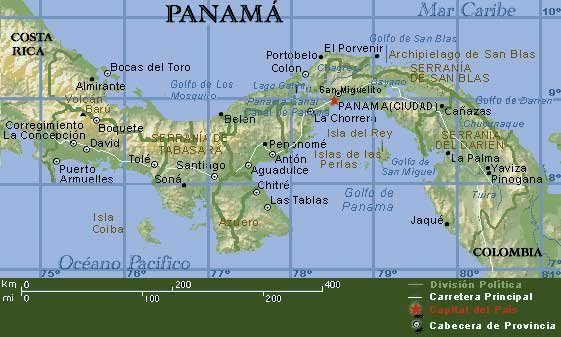
April and Kevin in Kuna Yala, the northeast coast of Panamá
Showing posts with label Culture. Show all posts

Wednesday, June 17, 2009

Campaign Signs

I know the election is over, but here are some photos of campaign signs.

("Chalo" is running for Alcalde, or mayor, of Santiago. Because he is the PRD candidate, he is in the first position on the ballot, thus the "1" with a checkmark. His suplente, or backup, is also listed. And the presidential logo for Bablina/Navarro 09 is included, along with the name and photo of Ruben de Leon for Diputado, which is more or less a congressman.)

Often, utility poles will be utilized by all the parties.

(This pole has a Molirena flag on top, then a Union Patriotica poster for Diputado - which also includes the presidential alliance with Martinelli of Cambio Democratico -, then off the side a PRD flag, a Cambio Democratico poster for Alcalde, and then a PRD poster. The PRD poster says Vota PRD and Vota Plancha, which means vote the party, and shows the Presidential candidate, the Diputado, the Alcalde, and the Representante. There is a "1" on the side, just in case you forgot which spot PRD holds on the ballots.)

Monday, June 15, 2009

Pressing Sugar

Back in April, just after the All Volunteer Conference, we went to visit another volunteer who lives near Chitre, where AVC was held. While there, some folks in the community were pressing sugar cane.

Sugar cane is pretty much a grass that can be grown one little plot in your yard, or in massive fields. The companies burn the fields to get the scratchy leaves off before the workers go through and cut it (so they end up sooty and blackened, but not scratched), and you'll see heavily weighted trucks carrying stacks of the about 8-foot long, 2-inch across stalks to the factories, where it is processed.

But small farmers do it on a smaller scale. They load the cane into horse-drawn carts and haul it to the trapichi, which is a horse (or person) powered press. There, each stalk is passed through twice to squeeze out the sugar juice.

(Jon and April watching the horse and farmer press cane; the juice drains out onto the metal ramp which sends it to a filter to remove chunks and then drip into the barrel)

Once the juice is squeezed out, it is heated / simmered over several days to concentrate it. Huge metal bowls are used to the process. This farmer had his built into the stove for the process.


(The bowl of sugar cane juice concentrating. The stick has a large strainer bowl on it for scooping out the concentrate.)

His stove was almost like the Estufa Lorenas, in that it concentrated the heat, thus using less firewood. The mouth of this stove is an old wheel rim.

(The stove mouth. The barrels hold processed sugar juice; buyers will pay $50 for the barrel, but then probably sell the contents piecemeal in town for $100)


Of course, there are other kinds of sugar and honey you can press. :) April and I, dressed up to go to a Samy y Sandra Sandoval concert the next night at the International Fair of the Azuero (the Azuero is the eastern side of the big peninsula on the south of Panama, containing the provinces of Herrera and Los Santos, and is famous for its "typical" Panamanian culture). Samy y Sandra's grandmother lives in the community where we saw the cane being pressed.


Monday, May 11, 2009

Panama National Election 2009

"Change" seems to be a global presidential theme. On 3 May 2009, Panama held their once-every-five-years elections, and Ricardo Martinelli (millionaire owner of the Super99 chain of supermarkets here in Panama), who started his own Cambio Democratico (Democratic Change) party, defeated Balbina Herrera, of the PRD party, a long standing party which currently holds office with Martin Torrijos. (Presidential candidates can not succeed themselves, so Torrijos did not run.)

But while the global themes of campaigns were familiar to the local campesinos (countrymen) in our area (we were often asked about Barack Obama, who did we vote for, and the similarity in themes between Obama and Martinelli), elections in Panama are much more of a local event. Be sure to watch the video at the bottom of this post.

As I said, elections are held every five years. At that time, citizens vote for Presidente, Diputado, Alcalde, and Representante. The Diputado is like a Representative in the US, serving at the national assembly level. The Alcalde is like a mayor or county executive. And the Representante is in charge of the local level issues (such as attracting the government funding to accomplish things like the solar panels all the houses have in our community, or the sidewalk constructed last year). He (or she; we had two female and two male candidates this year) is generally the first person residents ask when they need help with a project, need building supplies to improve their house, or need a new battery for their solar panel.

So over the past year, newspapers, TV, and radio were covered with ads for candidates (many analysts said that Martinelli could sink so much of his own money into the campaign that it greatly changed the dynamic and methods compared to previous campaigns). Other popular advertising methods include Tshirts, hats, and flags, as well as banners on the street lights, posts and trees. These banners often indicated who to vote for at all four levels. We even had a banner appear on the island that listed PRD candidates for Presidente, Diputado, Alcalde, and the local Representante (sorry, I didn't get a picture). When you see the ballots below, you'll understand how they can indicate who to vote for. But all organized events and paid advertising had to end by midnight on Thursday, 30 April. This was rather nice, as it provided a three day respite before the election. (The sale of alcohol was prohibited in this time period as well, so you couldn't be drunk the day of the election. Unless you made your own.)

El Dia de la Votación was Sunday, 3 May. And it is an event. Many folks are still registered to vote where they grew up, so although we have only about 150ish adults on the island, there were 265 votes cast in each race. (The influence of "outsiders" was greatly discussed, since they aren't really affected by the vote they cast for Representante, which to most of our neighbors, was the most important race.) Each of the four candidates for Representante provided a number of boat rides from port to the island in the days prior, and food the day of. Why food? Because everyone goes to the school to vote (polls opened at 7am) and then hangs out for the day, chatting with friends, etc, and awaiting the close of the polls at 4pm. At which time, the counting begins.

The voting is held in the school, with three members of the Tribunal Electoral (the election board) and one policeman to ensure the security of the process. (There is no vote by mail, or absentee voting, so those four could only vote for Presidente. An odd twist to service towards voting.) On the wall outside the voting room, they pasted instructions on how to vote and sample ballots.

(Fairly simple instructions on how to obtain your ballots - you need your ID card - then how to mark them, and finally how to cast them in their appropriate box.)


(No cameras, video cameras, or cell phones allowed inside the voting room.)


There is a separate ballot for each race. Each ballot has its own color coding to facilitate the process.

(The blue Presidential ballot, with pictures and names of candidates with party names and flags. )
There were EIGHT parties early on in the race. As time passed, alliances were formed that generally held at the lower levels as well. In a drawing of lots, the order of the parties on the ballots was established. PRD drew 1 (the red, white, and blue striped flag) and Cambio Democratico drew 5 (the green and pink "CD" flag). If you wonder why several of the photos and names look similar, that is because PRD formed alliances with Partido Popular (2, green star on blue flag) and Partido Liberal (6, red/white/red striped flag), and CD built alliances with Molirena (3, red and yellow triangles flag, with a red rooster), Partido Panamanista (4, purple/yellow/red flag), and Union Patriotica (7, red with orange stripe flag). A former president formed his own party, something like Vanguard of the Moral Front, and was spot 8 (of the 269 votes in our island, he received 2 sympathy votes from folks who apparently knew Martinelli would win and didn't want the guy to get nothing).
So if you wanted to vote for Martinelli, but were really a fan of the Molirena party instead of Cambio Democratico, you could cast your vote in spot 3, instead of spot 5. Thus your party (Molirena) was credited with bringing support to the alliance, and in the total count, Martinelli got your vote. Then (so goes the idea), when he is president, he will support your party's desires as well and reward your party bosses for the votes they brought to his election.

(The orange Diputado ballot. The pictures and names are smaller, and there are three "open" positions for anyone running as an independant. But the party flags and numbers remain the same.)

By the level of the Diputado ballot, some of the Presidential alliances had broken, and parties were running competing candidates.

(The pink Alcalde ballot. Molirena, 3, did not have an Alcalde candidate or alliance. The blue stamps indicate that this ballot has been nulled, so people can look at it outside of the voting room.)

All of the parties were allowed to have an observer in the voting room. Four of the parties did on our island, and the observers were residents of the island. Each one had a full list of the voting roster (a book with the name, picture, and ID number of each person registered to vote in that voting location). They watched from 7am until the counting ended, about 11pm, and ensured ballots were cast correctly, without coercion, and counted correctly. We did have one blind man vote (he does not live on the island, but I think grew up here; we have seen him before) and he was assisted by someone to mark his ballots, fold them (into quarters) and drop each one into the appropriate cardboard box, one for each race, with the appropriate color across the top.

(Our race for Representante. There were four candidates.)
"Chayo" ran on PRD (1), aligned with Liberal (6); he actually lives off-island, although he has a house in the south and is the brother of several residents. Popular (2) and Vanguard (8), did not have candidates or alliances at this level. Efrain Miranda (the Representante for the past 20 years, or since the new government process was instituted after Noriega's removal by the US and George Bush Sr) ran on Molirena (3), aligned with Panamanista (4). Paula (our first host mom on the island) ran on Cambio Democratico (5), aligned with Union Patriotica (7). We also had one Independant, Vielka, running alone in the pale blue 9 spot; she also lives off island but has a house in the south and family.
At 4:11pm, the workers from the Tribunal Electoral officially closed the voting and taped the boxes closed. The policeman entered the room to ensure the boxes were not messed with. The officials demonstrated all the remaining, unused, ballots to the observers, and then all seven of them walked outside and burned them (so no one could cast an extra ballot). Then they opened the box of Presidential ballots and counted them all out onto the table. 269, which is how many their records showed had voted that day (265 local, plus the three workers and policeman). Then they returned all the ballots to the box. They taped large sheets of paper on the wall, one for each party, each sheet with 20 rows of 15, to record the counting. Then one worker pulled out a ballot, determined how it had been voted, announced it to the crowd (while the party observers were in the room, interested community members crowded the windows and counted along), then demonstrated it to one window, the observers, the other window, and finally handed it to a second worker who double checked that the announced vote was correct and built piles for each party. The third worker marked one vote on the sheet of the announced party.
April made a video of this process. I highly recommend observing a part of the participatory election process that takes place in Panama every five years. Can you imagine this kind of interest in the United States? This video was during the Presidential count. You can see the boxes for the other three offices next to the reader.


After this, we walked back to the house, ate dinner, and I walked back again about 8:30 that night. They were in the midst of counting for Alcalde. After each race was finished, the workers summed the totals, the observers gave agreement, and the workers recorded on the official papers the votes per party, total votes, blank votes, null votes, and then they signed and the observers signed. Then they took the ballots and the sheets from the wall, and they all went outside and burned all the papers. No hanging chads around to count later.
The count for the Representante, the race the residents were most interested in, began about 9:30pm. It finished about 11. While Vielka (the independant) started off strong, Chayo collected a streak of votes and then never relinquished the lead. With their alliances only suppling a few votes to each candidate, their totals were: Chayo, 112; Vielka, 82; Paula, 35; and Efrain, 33. Some folks were very happy, some were frustrated, some were confused. Some thought the Representante should live on the island, but obviously even the majority of island voters didn't agree, so it wasn't a conspiracy of outside voters. I talked with Paula later, and she was happy; she may not have won, but her presidential candidate had won handily, and that was enough for her.
It was a long and tiring days for us, and we didn't even vote (we were taking Family Fotos as a fundraiser for the library project). But what an amazing chance to see such interested and enthusiastic involvment in the democratic election process.

Tuesday, April 28, 2009

Cultural Contrasts 2

A while ago I posted about some of the cultural differences that I have noticed in Panamá. YOu can read it if you like: Cultural Contrasts. I continue to learn about Panama, myself and the culture in the USA through these differences. These are just my observations...and I continue to observe so here is another couple for you to enjoy.

Flirting:
In the States a guy who is interested in a girl has to work up the nerve to come up to her. A guy has to have the guts to face rejection to get a chance. Just whistling at her or yelling "Que bonita" (how pretty) would not work, in fact it would likely work against him. Here in Panama whistling, hissing, and calling out piropos (spanish for calling out comments or compliments at a woman) is normal.

To my ear it sounds rude, like annoying bored construction workers, I would never pay attention. In fact there are times when I swear the next guy to say something will get the best earful of Spanish I can muster and I walk along practicing a good stinger to give. But here piropos are how a girl knows when a guy is interested...they say that it tells them that they are pretty.


Sidewalk etiquette:
In the USA when we are walking along a sidewalk side by side and someone approaches us from the other direction we automatically yeild some space by merging into single file. I wasn't even concious of this action until I got to Panamanian side walks (which are challenging just as sidewalks). In Panama they do yeild...but only the minimal necessary. They will not merge into single file...they just wait until that last possible moment to squish down to let you pass.

Every time it happens to me I swear that this is going to be the time they bump me off the sidewalk...but it is rare that thier bags even brush me. This felt unbelievably rude to me when I arrived, but now I realize that it is just the way things are done here. They don't run into each other...they just seem to have a different (smaller/closer) cultural norm on personal space needed for passing others. I still don't feel comfortable in those passing moments, but I have come to realize it is because I carry a different cultural expectaition from the norm here.

I have more cultural contrasts to offer...but I need to go catch a bus home. Take care on the sidewalks out there.


Sunday, April 12, 2009

Baseball Diplomacy - The Ambassador and the All-Star Game

After the Gulf of Montijo Health Fair, April left to be a facilitator at the Project Management and Leadership conference for PCVs and community members from the latest group. Kevin spent the week on the island, following up with folks about the fair. On Thursday, he came out, picked up April and they headed to Panama City. Friday was a day in the office working on the paperwork and receipts for the health fair, and Saturday was spent buying health-related books with grant funds (see the Health Fair post).


We also got invited to go to a baseball game on Sunday. With the US Ambassador to Panama, Barbara Stephenson. Back in Santiago - a four hour bus ride from Panama. But one of the PC staff was going, and offered us a ride, so we took it.


(April, Ambassador Stephenson, and Kevin in the Presidential Box at the new Stadium in Santiago)


The afternoon game, the one we went for, featured the US Southern Command baseball team (we aren't sure if the players also have tours of duty or how that worked, but it sounded like a pretty nice deal) against a local team. The nightcap was the Panama All Star Game, but our ride needed to head back to Panama, so we missed that one.


(April and Madame Ambassador tossing baseballs from our perch in the Box Seats behind home plate to the crowd below)


The game was a pitcher's duel, and although we had a runner thrown out at home, it was the local team that finally scored one in extra innings to finish the game. But we didn't mind, as we spent much of the time talking with the Ambassador, who was interested in how we made our VW Beetle run on used veggie oil and talking about The Not So Big House, both environmental issues we enjoy.


Other fun parts to the game, besides chatting with the Ambassador and helping her throw out balls, hats, and such, included the food...

(Not the Great American Ballpark frank, but a lot cheaper ;)

The hot dogs (salchichas here) were sliced in half lengthwise to cover the entire loaf of bread (bread, not bun), and the relish, well, I didn't relish it.

Here is April (miming) eating a salchicha so you can see our view of the game from the Presidential Box (okay view, but I think the stadium isn't quite finished yet, and the box was a little raw, with unpainted concrete counters, etc).

(April, a salchicha, and the Veraguas team batting against the Southern Command All Stars)
The other highlight was the visit of Margarita, the Panamanian winner of Latin American Idol last year, to our box to talk to Ambassador Stephenson. They are big fans of each other apparently. I'm sure many folks both on Peace Corps Panama staff and in our community would be jealous of us for being so close to Margarita, but without TV, we hadn't seen too much of the competition. We did happen to be in a restuarant for dinner when she sang the Panamanian national anthem (with all the verses, a bit longer than the American, so it was a heck of an effort), and it was quite beautiful; she won for a reason.

(Madam Ambassador with Señorita Margarita)
After the game, we were invited to the hotel where the Ambassador was staying for a bar-b-que, but our ride was returning to Panama City, so we headed out. Baseball is huge in Panama (bigger than soccer, which most folks probably associate with Latin American countries), and we had wanted to catch a game in the new stadium before we left. Now we can check that off on our list. Thank you Madam Ambassador.

Wednesday, April 8, 2009

Eating Lobster

What better way to celebrate a good day than with some friends and a great meal?? Well, the other volunteers who helped out at the health fair seemed to think that a celebration dinner was warrented...so we asked a fisherman on the island to sell us some lobster for dinner...and he was happy to oblige.

Stephanie, Jim and Teri with thier lobsters. Watching them hold live lobsters was good for a few minutes of chuckling. Notice that these lobsters have no claws like the Maine lobsters that I was used to...otherwise they look very simular.

Chico, the fisherman brought over 4 good sized live lobsters. We had been advised by another islander to pay no more than $4 a pound...but when the lobsters arrived the volunteers quickly caved in to his requested $5 a pound. As I probably will not buy much more lobster in my time here I let them pay it.

They then went off and hauled all of the chairs used at the Health Fair back to the casa comunal (community house or meeting space) with the help of my neighbors and their boat. While they were hauling chairs I cooked up the lobsters...complete with the requisite guilt over the necessary murder (yes, lobsters can make a sound). By the time that they returned the lobsters were a rosy red.

Now many resturants serve lobster whole on the plate and the eater gets to wrestle the meat free. I have found that the gooey stuff inside a lobster or crab is off-putting and I like to rinse the meat and eat with clean fingers. Normal procedure in the Cropper house now is to clean the lobster and rinse away the goo and then flash heat the meat with a touch of oil and spice (usually fresh garlic) and then serve with something else...like pasta and veggies.

Stephanie, April, Lee, Jim, and Teri crowded around the sink cleaning lobsters.

So the others joined me at the sink eager for a new food experience. In my experience (I don't imagine that I will have that much experience to reference after I leave Panama) lobsters are not that hard to clean if you know what you are doing. I guided each of them through the process step by step. Each person cleaned a lobster and did a good job, but it was funny to watch. Jim's lobster had a little post-mortem revenge. I am proud to say that no one bled...Kevin has never managed (even with instructions) to clean a lobster without pricking his finger on lobster spines.

Jim with a splash of lobster guts on his shirt.

We served the lobster with pan fried fish (caught that day as well) and pan seared vegetables. Yummy. No one went hungry that night. The next day we road to port with Chico and he was taking in lobsters to sell...and had one that was 4 pounds...as many pounds as all 4 of our lobsters the night before combined! This made me wonder about how fast lobsters grow and how old the lobsters were that we ate. So I did some digging online and came up with the following cool facts:

Lobsters, when not caught, can live for a long time. Living to the age of 100 is not uncommon. Of course, because lobsters are prized for their meat, many don't make it past just a couple of years old. Lobsters must be a certain length -- not age -- to be deemed legal for catching.

It takes approximately seven years (depending on the water temperature) for a lobster to grow to legal harvesting size (1-1 1/4 lb.). After that, a lobster will grow about 1 pound for every 3 years. (April Note: This would mean that the lobsters that we ate were around the age of 7-9 years old. The big 4 pounder could have been around 16 years old. )

It is interesting to note that lobsters show no real signs of aging, other than growing. They actually can reproduce and stay fertile continuously! The secret lies in their telomeres.
Telomeres are found at the end of chromosomes for all living creatures. As we age and cells divide, the telomeres shorten and eventually disappear- leading to aging and death. Lobsters telomeres take a much longer time to shorten , if at all- allowing them to 'maintain their youth' (A lot of anti-aging experiments are done with lobsters)

How big can lobsters grow? The largest lobster ever recorded weighed in at 44 lb. 6 oz. and measured 3 ft. 6 in. from the end of the tail to the tip of the largest claw. It was caught off southern Nova Scotia in 1977 and sold to a restaurant in New York City. In the Pliocene period, over a million years ago, lobsters were five to six feet long! These days a 3 or 4 pound lobster is considered a good sized feast!

Thanks to the following websites for the fun facts:
www.parl.ns.ca/lobster/faq.htm

http://wiki.answers.com/Q/How_old_do_lobsters_get

Monday, March 9, 2009

Palm Wine

(Photos uploaded by April; text by Kevin)

There are lots of reasons to chop down a tree. Cut it into lumber. Make Firewood. Clear a field. Because it threatened to drop a branch on the house. Because it drops stinky fruit on our porch.

Recently we encountered a new reason: because it makes a vina de palma, or palm wine.


(April and Ancelmo at a felled palm; he will scoop the wine and fill that small container. It is hard to see the trunk of the tree for all of the fronds around it...but he is working with the trunk.)

On Ash Wednesday (in other words, the day after four days of Carnaval fun had finished), I was pasear-ing around the island to tell folks about a meeting on Saturday. My last stop was at Ancelmo and Paula's house. They had been our first host family on the island and are always glad to see us. This time, Ancelmo was even more amigable (friendly) than normal; for him Wednesday was the day to finish up anything (alcohol) that hadn't been consumed during the previous four days. After chatting for a bit, they asked if I wanted to see the vina.

Well, I wasn't sure what that was, but I agreed to follow them up into a field. They assured me that it was not that far...and sure enough we soon arrived at where they were making vina de palma and I finally understood. After realizing what it was we were after, and enjoying some good vina (not as much as Ancelmo), I agreed to bring April back the next day. These pictures are from that visit.

The palm (not all types of palms work for this; some are used for their fronds to make roofs, this one is used for wine) is cut down and a hole is cut in the side, near the former top of the tree. There are other countries where palm trees are tapped to make wine rather than cut down, but in the island these trees are basically weeds that are allowed to grow for a few years just so they can be cut to make wine.


(The hole in the side of the tree)

The sap continues to climb the tree for about ten days afterward, where it collects enough to empty the hole twice a day. The sap contains natural yeasts that start fermentation immediatly and naturally.


(Ancelmo scooping the vina from the hole)

The other option, besides scooping out all the vina into a container to bring back to the house, is to cut a reed that serves as a straw, and enjoy some vina right there in the midst of the long, dangerous thorns that cover the palm.


(Me following Ancelmo's directions to try some more, try some more)

So how does it taste? If you empty the hole, the next time it will have a very warm initial taste followed by an almost sweet vina. That was how it was the first afternoon I was there. Take a long sip, because while the first taste may be a shock, the rest is better.

But (possibly due to his enjoyment of other beverages earlier that day), they didn't bring the cup to scoop out the hole that first day, this left some of the wine fermenting for another 24 hours. So when we returned with April the next day, the vina had fermented a bit more, and was, as even Ancelmo put it, fuerte (strong).


(My reaction on day two shows the difference in flavor and strength)

To keep the sap flowing, after emptying the hole you need to carve off the upper-most layer of the heart of the palm. Like a Christmas tree, this keeps it from sealing over.


(Anclemo using his machete to scrape off the leading edge of the palm heart)

Then before you leave, the hole is re-covered with the chunks from cutting it, as well as some of the spikey palm fronds, to protect it from ants, bees, animals, dogs, horses, and neighbors.

(Ancelmo putting the frond over the chunks in the hole)

The day April and I visited, we didn't partake much of the vina, since it had developed such a strong flavor. But the first day, I'd been hiking and chatting for about four hours by the time I arrived there, and I was thristy. And Ancelmo kept saying, try some more, try some more. The sun was setting, and I needed to walk fast to get back at least to the sidewalk before it got too dark to go safely over the rocky trails.

But the sky and clouds were turning beautiful colors and we were hanging out in the middle of a field drinking from a recently cut palm tree. I just couldn't feel in a hurry to leave. Using a straw, I have no idea how much I sipped, but it wasn't too strong that day, and I made it home happy and safely.

Friday, February 27, 2009

Ngöbe Dancing

(Kevin was logged in when I uploaded the videos, but this is really April.)

I recently worked as a Facilitator and Team Leader at the Project Management and Leadership (PML) conference for Group 61 Volunteers and their Community Counterparts. The PML conference teaches very basic leadership skills (how to use an agenda, how to write a letter to an agency, how to speak about your project to others, how to run a meeting) to Panamanians. All of the participants are chosen for having demonstrated leadership potential in their community.

One evening during PML is Cultural Evening, with sharing of aspects of culture. Conference participants are told before they come that they will have a chance to share their culture with the group and thus come prepared with crafts and demonstrations planned. Several volunteers are serving in Ngöbe sites. The Ngöbe are an indigenous peoples living mostly in the Comarca Ngöbe Bugle, between Bocas del Toro, Chiriquí, and Veraguas. They shared, along with their volunteers, several of the dances from their culture.

Below are videos clips of a couple of the dances that they shared with us. In the videos notice the clothing...the women are wearing traditional nagua dresses. A nagua dress is characterized by the voluminous quantity of brightly colored material and the intricate hand sewn designs along the collar, sleeves, hem and waist. By brightly colored I mean teals, bright pinks, yellow, orange, reds, greens. I have occasionally seen naguas in pastels or patterned materials...but that is rare. I have been told that this style of dress dates back to the arrival of religious missionaries who taught the Ngöbe Bugle that it was better to dress modestly. Before that time the Ngöbe Bugle wore less covering clothing (cooler in this climate).

Thanks to Patrick for the videos, I did not have my camera in the room...so he shared with me.


Each dance has a specific name, just as each design on their dresses has a name...but the name for this on was in Ngöbera and it did not stick to my English -bound brain.


The above dance was called the Drunkard, and as I am writing this post on a day in the middle of carnival, I can say that there is some real resemblance to drunken dancing


The above dance, the only one executed in a circle, was called the Monkey. The volunteers that you see in the videos live in Ngöbe communities and were included just like all the Ngöbe Bugle in the room in the dance. It was pretty cool. I will be doing another PML seminar at the end of March...so I will look for more interesting culture to share with you.

Monday, February 23, 2009

Kori's Visitor View

April's friend from college, Kori, works at YMCA Camp Willson in Ohio. She came down to visit us over New Year's, right after Tabassum and Linda, and shared some time with them and with Kristin. A woman of few words (unless you catch one of her standup comedy routines or knitting seminars), here are her responses to the visit questions.


(Kori and April at the airport upon her arrival)


Q1: How was Panama what you expected?

I traveled with open expectations. I was humbled by being an "the foreigner" and have a better respect for the International students who travel here for the summer camp employment


(Employing those summer camp attitudes of try anything, Kori competes with our neighbor in a game of pop-the-head-off-the-clover)


Q2: How was it different than what you expected?

I did not expect to see so much influence from the States. I was suprised to see so many movie and tv references in all the communities I visited.


Q3: What struck you about the USA when you returned home?

time, schedules, and busy "Americans"


Q4: What was your best moment in Panama?

Either the "conversation" with the old man on the pony by the river in Sante Fe or the bus ride to the Ruins of Panama City.


(April and Kori in an archway in Panama Viejo)


Q5: What did you find most interesting or most notice about Kevin and April's life in Panama?

Candle-light dinners

Q6: Free response - anything else you´d like to say about your trip and time here.

On our island exit morning, we were waiting for the boat and playing the guessing game for when it would arrive. We had plenty of time to watch the falling stars and the sun rise. Yes, sleep is good, but so is seeing such peaceful beauty.

I look forward to another trip to the Island and have looked at flights for the spring.

Thursday, February 19, 2009

Kristin's Visitor View

Our friend Kristin went to college with April and has lived near us in Baltimore for several years. She, along with Kori, came down over New Years, just after Linda and Tabassum visited. After Kori left, Kristin then took a short trip to Kuna Yala (accompanied by April "for her Spanish help" - I think it was a boondoggle for April to get some more snorkeling), and then spent two more weeks of traveling around Panama on her own. Her last day in Panama was the night April's folks arrived, and we caught up with her again that day. Here are her impressions of her trip, which, while more free-form, I've tried to group with our questions.


Q1: How was Panama what you expected?

In a way Panama was what I expected but at the same time I tried to keep an open mind. I did have an (apparently good) idea of what to expect, mostly from blog info and from talking with April throughout their time here. I also had been to Peru a few years ago and Panama City reminds me of Lima, Peru. Hot, sprawling and congested, but still with plenty of historical places to see as long as you are willing to sweat while you adventure out.


(The famous flat arch in Casco Antiguo; having stood for hundreds of years, it was deemed a sign that Panama was safe enough from earthquakes to build a canal there)


(Another perhaps not so historical place; worth sweating for?)


Q2: How was it different than what you expected?

I was surprised to learn that water is safe to drink in all of Panama. I really didn´t expect that.


(The water is safe, but sometimes you have to be careful of what your friends tell you to take a bite of. Butt-in comment from April- hey, that is a marañón, the fruit that grows just below a cashew nut. It was a perfectly edible fruit kindly donated for our tasting pleasure by ouir bus driver who had een planning on eating it, this was not a trick taste testing. April tried it as well, just after taking this photo despite seeing Kristin´s reaction.)


Q3: What struck you about the USA when you returned home?

What struck me about the US is that no one says hello to you. In Panama, you say Buenas dias, or some variation to many people all day long. Then you ask how they are, then you say what you need to say. They like the greetings. They look you in the eye. Most of that does not happen here. That will take some getting used to. That's a basic level of humanity I think is lacking here.

But, I do have to say, that when the customs people said "Welcome home", that was nice. Even if I would be shortly facing glassy Baltimore ice, while still itching bug bites and wearing sandals.


Q4: What was your best moment in Panama?

For question 4 I will divide up my answer, since I was in Panama for 4 weeks, 2 with April and Kevin and 2 without them.

Panama With April and Kevin
I really enjoyed the evenings of cooking, playing cards and talking as these are some of the things I've missed the most while they have been gone.


(Cooking shrimp) (Cleaning lobster)


(Salted fish) (Making maracuya, or passion fruit, juice)


I really enjoyed seeing how the people in their community respond to them when they would see them. It's obvious that they have developed real friendships with many people on the isla.


(Kevin and April and several kids in front of the tienda, after English class)


One of the funniest things was on one bus (I don't remember where we were going) it got so crowded, that Kori and I were on one side and April and Kevin on the other and there were so many people in the aisle that I could not even see them anymore. I did get a glimpse at one point and both of them had babies on their laps (whoever is sitting on these buses gets to hold a baby if one needs to be held). I would have liked a photo of that one, but there was no space to get it. (I was on only one other bus that was more crowded, that was on my last day on the way to the canal. I don't think I had space to turn around and even try to count heads. The lady sitting next to me said it was Mal servicio - bad service.)


(Not sure how this didn't rate as Kristin's funniest bus moment - check the rearview mirror)


Other highlights:


  • seeing Kuna Yala with April for a few days. That was an adventure just getting there! It's exactly what you think of when you think of a Carribean Island.

  • April's cooking on the island, I swear she could pull a rabbit out of a hat. She always has some plan going on in that cabeza of hers...

  • Being able to have April and Kevin ask anyone pretty much any question we had. We were much more able to get to know random Panamainians with their conversations. Something someone couldn't do if you can't communicate in the language. People, once you started talking with them were very open and sharing. Witnessing this also made me try it a few times later on my own. I couldn't find out as much information, but I could get some. And usually, it would turn into a random English/Spanish lesson. They seemed as nervous about their English as I was about my Spanish. It was nice when we both made an effort.


Panama Alone
Spending more time in the country was nice. Traveling alone was fine, as I could meet up with other random travelers and find out information about the next place. Plus, I had gotten a crash course from A & K about culture tips.

On my last day in Boquete, I went on one of those tree-top zip line trips. It was about 15 lines, up around 6000 feet. It was a chilly morning and I had on all my layers (2) so I thought I would freeze the whole time. But, then I realized how much work it was, so I was fine. I had gone with another traveler I had met and then we met another family traveling from the US. We all had a good time. In the afternoon, I ended up going with this family to some nearby hot springs. They had a rental car, so it was easy to get there (something I wouldn't have seen otherwise). It was a little too hot out to be sitting in hot springs for long, so we ended up relaxing in the river for most of our time, with a few dips in the hot water.


I ended the day by eating at a place they recommended and a type of food I didn't think I would be eating in Panama: Mediterean. Homemade hummus, pita, and falafeal. And just when I was thinking about the cheesecake... they all walked in to have dessert. After, they dropped me off at my hotel. It was a great combination day of working hard, meeting new people and eating good food.


Here's a picture of a meal I had in Cerra Punta. It was freezing there!


* soup w/ zapallo (I recognized this from w/ you guys)
* strawberry shake (the book said you had to have strawberries here, so I did!)
* very good roasted chicken w/ rice and beans. I still love beans.
* a decent salad, and
* lunch time reading.


Q5: What did you find most interesting or most notice about Kevin and April's life in Panama?

As far as your day to day lives, I wasn´t too surprised since your blog is so accurate! Although, reading about a composting toilet and seeing one in action are two different things... :-)

I more understand the process to get things done there (although, I´m sure not even close to completely understanding it). Things seem to be done is small doses. A step here, a step there, maybe several days apart. A little information shared in this conversation or that. From April and Kevin´s point of view, with an end goal or plan in mind the whole time. The planning and patience involved is very high. The satisfaction of accomplishment maybe takes longer to realize.

But the thing I noticed about A & K's lives was the amount of planning everything takes. EVERYTHING. Everything is a lot more work. Many times it would seem a more basic life, without as many complications, but it isn't less work; it's more. April is very organized and has things down, but to get to this point I'm sure it took a lot of trial and error.

Monday, February 16, 2009

Tabassum's Visitor View

Tabassum, a friend from our Maryland Search and Rescue (MSAR) Venture Crew visited us over Christmas with another friend, Linda. Here are Tabassum's reflections on the visit and Panama. Linda's reflections posted a few days ago.


(Tabassum and Kevin in the boat to the island on Christmas Eve)


Q1: How was Panama what you expected?


Well, I think it was definitely the temperature that I expected, with the poverty level and infrastructure that I expected, although at different points I was very surprised by the layout of the land. I expected the mindset of individuals to be more laid-back, and was not disappointed to find a simpler way of life overall, especially within the island community. I also expected food to be cheap, and was not disappointed! :)


Q2: How was it different than what you expected?


I was amazed to orient myself from East to West instead of North to South, because the landscape seemed so diverse, with mountains in the middle of the country and shoreline at the edges. It seemed as though each time we were journeying, there were mountains and water on either side. That was different from the US, even with the MSAR experience.


I was amazed to find rather odd animals on the island and odd sounds with lizards and birds that sang. It really made me feel at peace in a different way than if I had gone out to the woods and wilderness here. Everything looks different, the sky, water, stars, sun, birds, trees, it's beautiful and serene but enchanted was the word that kept coming to mind.


(Tabassum and Linda walking along the sidewalk to the school)


I was also amazed at the reliability of public transportation and and the numerous kinds (and completely impressed with K & A's abilities to navigate them all, that took a lot of work for me to even begin to understand), as well as the distinct markings on buildings (specific colors for a school, government building, hospital). Everything seemed very uniform to me, which was interesting.


I also was shocked at the way things seemed to be so closed riding through the countryside, it gave an appearance of privacy but really fences and gates were supposed to be against danger of the inner city population and crime. I just had no idea what could possibly be more dangerous than Baltimore in the US, and felt rather safe in Panama wherever we were.


On the island, life and people were curiously friendly, which was expected, but a simplistic eagerness to understand and learn seemed to underly each individual that we met. I was amazed to find myself comfortable in a strange house just because kids and adults treated each other with the family values I am so used to, courtesy and respect.


(Linda and Tabassum comfortably playing bingo with community kids and adults)


Q3: What struck you about the USA when you returned home?


Honestly, the pollution and industry really struck me. Because I was in love with the island and the aspect of nature that made me feel completely at home, and of course the weather was a rude shock. Going from 85 to 25 in 10 hours was incredibly shocking.


Our customs of "fake friendliness in the US" made me feel rather isolated. In Panama I would not have hesitated to ask for questions or directions from a complete stranger, whereas in the US, each individual is not working with others in their community on a daily basis. I was pleasantly surprised to be much more laid back about life and time when I got back than I usually am. I also took many more moments to just appreciate being outside and enjoying nature. Time seems to stop on the island, and I wanted to keep a little piece of that to bring home with me.


(Tabassum, "laid back" in a hammock, appreciating being outside)


Q4: What was your best moment in Panama?


My best moments in Panama were definitely looking up at the stars for hours or just being on the beach, completely serene. I really enjoyed anytime we were cooking, cleaning, or creating something, even learning how to skip rocks or sitting in the boat, it made me appreciate the simplicity of daily tasks that we take for granted.


(Enjoying time cooking)


(Enjoying time together, with the results of the cooking)


I loved just spending time with Kevin and April, I miss them a lot. By far my best moment on the whole trip was when I realized that Kevin and April were the same amazingly incredibly beautiful couple that I admired and loved back home. It hadn't hit me until we were on the island that they may have changed. It made my heart smile to know that they had, but that it was for the better, and that what made them stronger and even more in love was this experience.


Q5: What did you find most interesting or most notice about Kevin and April's life in Panama?


I definitely found the incredible diversity and culture of the people of Panama to be the most interesting. I loved seeing the pride and identity of the wonderful groups spread out across our travels, and would love to have been able to appreciate that even more. I notice most the simplicity of Kevin and April's life, and loved each moment I was able to share that simplicity. About K & A in particular, well, let's just say that being with them and in their dynamic just made me even prouder of them and infinitely harder to leave.


(Tabassum in the airport, managing to leave anyway)


Q6: Free response - anything else you´d like to say about your trip and time here.


I really enjoyed making the calabasa bowl, even though mine cracked on the way home, RIGHT where Cecilia said it would :(


(Tabassum watching as Cecilia's oldest daughter takes over the cleaning of the outside of her calavasa)

Wednesday, February 4, 2009

Year end school party

At the end of the school year, which occurs down here in mid-December, just before the summer break, there is a party.

But it is more than just a party for the students. It is a party for the students, the teacher, and the madres and padres de familia (in essence, the PTA). This year, the students actually did some fund raising to help pay for the event, in the form of tumbulas, or raffel drawings. (Admittedly, similarly to in the states, most of the chances were purchased by the family, not by selling to neighbors and such, so the fund-raising burden was on the same audience.) The Padres de Familia (PdF) also had raised funds over the course of the year, including a chicken project (buy chicks, raise them, and sell them as 4-pound hens for about $1 to $1.50 a pound), and selling some teak wood planted on school property.

So what does all that fund-raising get you in a year end party?

Well there is the food: arroz con pollo (shredded chicken in flavored rice with olives, raisins, carrots, and other additions), ensalada papa (potato salad, with a pink or reddish color when made Panamanian style due to the beets they use), some bread (a rarity in our community), and the traditional Christmas foods of an apple and some grapes. They love apples but do not eat the pple skin...they bite off a chunk, chew until there is only skin and then spit out the skin.

Then there is a gift bag for all 21 students, with a toy and a Tshirt. And a gift for each parent, generally a nice shirt for the dads, and a fancy shirt, nightshirt or a cosmetic product for the moms.

And the piñata, full of confite (candies) and confetti.


(Swinging the bat at the snowman piñata; see the line of boys behind, ready to go)


(Sometimes a hit doesn't break the piñata but results in a few pieces flying out; despite the possibility of another swing with a metal bat just over their heads, the kids go diving to recover the candy; I'm not sure if the woman in yellow is a mom trying to protect them from getting hit, or trying to grab a piece too. April's comment- She is diving for candy...pretty sure.)

This year's piñata was a good one, that took a while to break. April took a video of them swinging, the handler pulling it out of reach, and then it finally breaking and the mad dash to grab as much candy as you can, children and adults alike. (But video is too big to upload, so we have no pictures of the final mad dash.) Everyone brings a plastic bag to carry it all home.


(The piñata handler in the back of the room, watching the swingers and pulling the rope to make them miss; when the piñata started leaking, he also decided to pull it up of reach or shake it to break it and get everything out)


(Afterward, the confetti is fun to play with; Roxana and Soray swept the floor not to clean up, but to toss it back on each other)

They also bring plastic bags to carry home the distribution of left over school food. The education ministry supplies the school with rice and beans and lentils for the school lunches that the moms cook. But the distribution sometimes lags, with the first batch of food not arriving until school has been in session for a few weeks, and the last with no time left for the kids to eat it all. So the parents divide it up amongst themselves, since it won't keep over the summer until school starts again in March.

The maestra (teacher) and Cecilia (one of our host family moms and the president of the PdF) and some of the other moms pulled out the 50-lb. bags of rice and set about evenly distributing them into the bags the parents had. It was a bit of a mob scene at times, despite knowing they would all get some, in part because they could leave once they got it. At one point, Cecilia winked at April and said, "Parace como Somalia, no?" ("Looks like Somalia, doesn't it?"). For a woman without a TV, who just gets the news from the radio, it was an interesting observation.


(Cecilia distributing beans; the source bag, on the ground, is marked with the Panama flag and the government name)


(Distributing beans, with everyone waiting in line)


Oh, and while we were waiting for whatever was the next step of the party, Kevin became the entertainment for some of the smaller kids with the You-Jump-I-Lift game. Considering how much taller he is than most Panamanians, it was a bit like flying and rather exciting for them. Luckily, one of the moms finally came over and told the kids in line (they cycled back into line numerous times, organizing themselves and encouraging in the more timid littler ones) that Kevin needed a break and this was the last time. :)


(The You-Jump-I-Lift game; some got the concept and timing better than others)


(Kevin lifting Bebo (José), but note the look of excitement on Carlito's face)

It a fun time for all, and a pleasant way to end the school year and calendar year.