So, this has been a rather quiet week for us...just training, no movies or galavanting across the country. So I figure I can take a moment to tell you about one of the every day realities of life in Panama...lodo. Lodo is the Spanish word for mud.
In acctuallity we have not yet had any really deep shoe sucking mud momemts here yet (they say that it is just a matter of time). And, before you get the wrong mental image of a country that is just one big muddy road lined by deep forboading jungle let me tell you that that had not been my expereince. When it rains here we do get mud. I have seen two different types....the sitcky stuff and the not sticky stuff. I don´t know what the diffence is, but the path behind our house is a whiteish soil that is firm and does not ever get slick or sticky. It makes a very nice path.
The more common type of mud here is red in color and sticky as can be. It is not uncommon while working in the garden to get a 2" layer of mud stuck to the bottom and sides of your shoes. When it gets that big the wieght eventually causes it to peel free and you start up a new layer. It is persistantly sticky. I have left my shoes to dry for a day or two and gone out to hit the mud off and had it not come free. When using tools like a shovel it is common to have to stop and use a stick or machete to clean the mud off of the tool so that it doesn´t interfere with your work. Digging in Panama is hard work...much harder than back home. The soil feels more dense and heavy.
The red mud drains quickly and dries (well, as dry as it gets here...not to the dusty stage) to a nice firm surface. The only areas that seem to stay persistantly yucky are low lying wetspots that get heavy traffic. Something funny, I once thought that I had the start of a good sandal tan...just to wash my feet and find that they had been stained by the mud.
Stay tuned for more postings on life in Panama - including a posting on "Los Diablos Rojos"!

April and Kevin in Kuna Yala, the northeast coast of Panamá
Sunday, June 10, 2007


Site announcements coming soon!
Hey all,
Just a quick note to let you know that we will be finding out where we will be assigned on Wednesday. This will finally answer the question that you have been asking since last spring...."Just where will you be living and working???" We will post info as soon as possible after that for you to enjoy. I think that it is going to be very good. Stay tuned!
April
Just a quick note to let you know that we will be finding out where we will be assigned on Wednesday. This will finally answer the question that you have been asking since last spring...."Just where will you be living and working???" We will post info as soon as possible after that for you to enjoy. I think that it is going to be very good. Stay tuned!
April
Photos from Volunteer Visit - previous post
These photos are from our visit to see Noah and Karinne in thier community. Every trainee gets to visit a current volunteer at thier site for a weekend. See the previous posts for a discription of our visit, when we posted we did not have a way to upload the photos.
 April and Kevin on a chiva.
 Chivas are a main method of transportation in the campo...which means anywhere off of the main highways and big roads. Chivas are 4wheel drive trucks with a roof and two hard small benches in the back. Cargo gets strapped to the top, and people get crammed inside. We were the last stop...that is why you don´t see other passengers.
 Kevin on the Chiva. Clearly head room was not a high priority in the creation of this chiva. They tell us that not all chivas are this short. Kevin hit his head multiple times each way...hard enough to be heard over the engine noise.
 A view of the community fair grounds. Each small community has a Saint or "Patronales" that they celebrate - sometimes for days or weeks at a time. The fair grounds at this communtiy become a market and activity area for thier week of celebration.
 The view from Noah and Karinne´s porch. They have a beautiful site location. Almost (emphasis on almost for me anyway) worth the 3 plus hour chiva ride.
My first of the really big Panamanian creatures. This spider´s main body was easily as big as my thumb. Wow. The list to date includes: two small scorpions, a BIG tarantula, many mosquitos, tocans, many interesting and colorful birds, a cool big lizard (that bit Colin in our group 4 times...but Colin is the guy who catches lizards and stuff and gets bit as a result of the fun) and a lightning bug that had to be as big as my thumb with an orangey colored light rather than the typical green/yellow. (Ok, on that one we didn´t actually get a look at the bug as it was dark....but there are other witnesses who agree that it was a lightning type bug. I guess we could all be wrong...it could have been a tiny UFO.)

We took a walk/hike with Noah and Karinne to a water fall and swimming hole. Our camera batteries were limited on this trip, so these are the best of the photos.
Monday, June 4, 2007
Hogwarts
Wow, what a first few weeks. In the very limited free time we´ve had, I´ve been reading Harry Potter 5 (Order of the Phoenix) in prep for the movie and to re-read HP6 before the final book comes out. And I realized that Peace Corps Pre Service Training (PST) is just like going to Hogwarts (the wizard school, if somehow you haven´t read them nor know someone who has). Tons of new words we´ve never heard before, tons of homework just piling up in Spanish class (read this, write this, discuss this with your host family, all in Spanish) and in Technical Sessions (here are fifty new trees you need to be able to identify, all presented in thirty minutes walking around the finca - farm; here is a nivel - level - that you need to be able to build from two 2-meter long sticks, some twine, a tape measure, and a few nails; here is a recipe for bocachi - japanese name for organic compost - that requires 200 lbs of chicken poo amongst other items; and an amazing overload of other new trainings and information). Add to that the new foods we´re eating, plus the ones we don´t think we want to eat (no kidding, on our first day trip to a finca, we saw - and some of us more adventurous ones tried - a fruit that reminded me of mibelus mimbeltona - a blistery plant from HP5 - and smelled and tasted like stale vomit - again, no kidding! And the reason there are lots of these around is because they juice this stuff and sell it in gyms and healthfood stores in the states - obviously with some taste modifiers - so everyone planted one because they were selling for a lot, but then everyone planted one, so the price dropped.) and it is very similar to Hogwarts.
We even ride an equivalent to the Knight Bus, called Diablo Rojo (or, Red Devil) when we travel around Panamá City - they are old school buses from the US, painted up inside and out in crazy, but very artistic, designs, the door is generally bungee corded open so it never closes, and the seats PACK in when people get on. The first one we road to Panamá City for a day of locating points of interest actually got condemned (or something, we weren´t sure what) when we arrived there, but luckily another person on the bus took us to another one to finish the ride.
So that has been wonderful, if at times overwhelming. But we´ve managed (by us, I mean both April and I together, as well as working with our other Group mates) to get through it all.
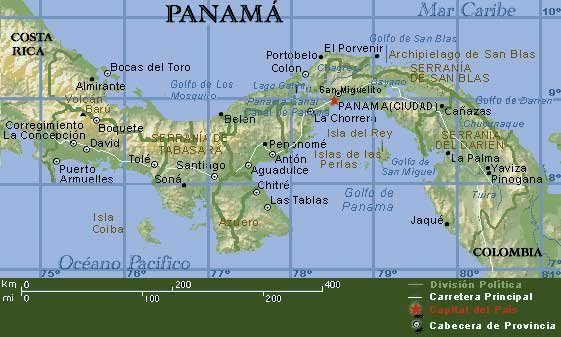
This weekend (April and I are currently sitting in Santiago, provicinial capital of Veraguez, west of Panamá City, before finishing our trip back to our PST site), we went on a Volunteer Visit to spend time with current volunteers and see how they live, deal with work, food, people, etc. Luckily, another volunteer from the area was going as well, because we might not have made it. The ride required a four hour chiva drive - pickup truck with benches and a top in the back, where we rode with gear strapped to the top - from Santiago. The last two hours were off the pavement, but it hadn´t rained much lately, so the roads weren´t too muddy and we only had to walk once. But the chivas are scheduled to leave the Santiago terminal at 4am and 6am, but sometimes the 6am doesn´t go, so don´t count on it, and sometimes the 4am leaves early, so we had to get there at 3:15am. So it was good to talk to Bryan, who guided us through the trek. The mud road was almost easier - they drive fast on the pavement, but it is so potholed, they swerve all the time and straighten the curves - since it was slower - I just had to worry about bouncing my head off the ceiling - everyone else pretty much could sit upstraight. :) Luckily, Bryan got me a set at the back end, so I didn´t get carsick, but dad would never make it.
Once we got to Noah and Karinne´s, it was beautiful, if only 8am!! We ate great all weekend, talked Peace Corps and Panamá, work, the states, the future, hiked, swam in some waterfall pools, saw the BIGGEST fireflies I´ve ever encountered (practically small hummingbirds!), and even got to attend a charla - talk - they held on Saturday to talk about coffee - the main local product - with the local campesinos (farmers). I could follow their Spanish, but not the locals yet. And we got to de-husk some coffee beans by hand - a small batch Noah had, just while we were sitting around on the porch talking. It was a wonderful time and we were really lucky with our visit, since we had so many experienced PCVs to talk to, such great food, and beautiful view. (I´d post some pictures, but we didn´t bring the cord to the camera, so hopefully next time.) We had electricity the last half day, after someone fixed the local hydrogenerator finally (we had a teasing false alarm Friday evening) and had running (but unpotable) water most of the time. This morning, we got up at 4am for the 5ish chiva ride down, but it didn´t come by the house until after 6, so we got breakfast, chatting, and a beautiful dawn (we did get on before the sun crested the mountains). The ride down was mostly uneventful, and it was a surprise to get here feeling the day should be half gone and realize it is only 10 or 10:30am. We still have about a three hour ride back to our PST site, then back into homework, talking in Spanish with our host family, and local food.
Sorry I haven´t posted more before, we seem to get about an hour online a week so far, and the computers (or maybe the network connections) here aren´t quite as fast as home, so it takes longer than I expect (of course, if you look at the posts about my estimates for packign the house and moving, you´ll see my expectations are frequently off :) to read emails, do some responding, and try to post. I´ll keep trying to give updates with more about classes, abono (fertilizer), Spanish, food, beautiful sites, and etc. In about two weeks, we should know our site; I won´t be able to post the name, but I should be able to indicate how beautiful it will be. :)
As always, thanks to everyone for their support!! We are really looking forward to getting through PST and into our site, doing some work and having some down time as well. This weekend was practically a great, and much needed, Hogsmeade weekend.
We even ride an equivalent to the Knight Bus, called Diablo Rojo (or, Red Devil) when we travel around Panamá City - they are old school buses from the US, painted up inside and out in crazy, but very artistic, designs, the door is generally bungee corded open so it never closes, and the seats PACK in when people get on. The first one we road to Panamá City for a day of locating points of interest actually got condemned (or something, we weren´t sure what) when we arrived there, but luckily another person on the bus took us to another one to finish the ride.
So that has been wonderful, if at times overwhelming. But we´ve managed (by us, I mean both April and I together, as well as working with our other Group mates) to get through it all.
This weekend (April and I are currently sitting in Santiago, provicinial capital of Veraguez, west of Panamá City, before finishing our trip back to our PST site), we went on a Volunteer Visit to spend time with current volunteers and see how they live, deal with work, food, people, etc. Luckily, another volunteer from the area was going as well, because we might not have made it. The ride required a four hour chiva drive - pickup truck with benches and a top in the back, where we rode with gear strapped to the top - from Santiago. The last two hours were off the pavement, but it hadn´t rained much lately, so the roads weren´t too muddy and we only had to walk once. But the chivas are scheduled to leave the Santiago terminal at 4am and 6am, but sometimes the 6am doesn´t go, so don´t count on it, and sometimes the 4am leaves early, so we had to get there at 3:15am. So it was good to talk to Bryan, who guided us through the trek. The mud road was almost easier - they drive fast on the pavement, but it is so potholed, they swerve all the time and straighten the curves - since it was slower - I just had to worry about bouncing my head off the ceiling - everyone else pretty much could sit upstraight. :) Luckily, Bryan got me a set at the back end, so I didn´t get carsick, but dad would never make it.
Once we got to Noah and Karinne´s, it was beautiful, if only 8am!! We ate great all weekend, talked Peace Corps and Panamá, work, the states, the future, hiked, swam in some waterfall pools, saw the BIGGEST fireflies I´ve ever encountered (practically small hummingbirds!), and even got to attend a charla - talk - they held on Saturday to talk about coffee - the main local product - with the local campesinos (farmers). I could follow their Spanish, but not the locals yet. And we got to de-husk some coffee beans by hand - a small batch Noah had, just while we were sitting around on the porch talking. It was a wonderful time and we were really lucky with our visit, since we had so many experienced PCVs to talk to, such great food, and beautiful view. (I´d post some pictures, but we didn´t bring the cord to the camera, so hopefully next time.) We had electricity the last half day, after someone fixed the local hydrogenerator finally (we had a teasing false alarm Friday evening) and had running (but unpotable) water most of the time. This morning, we got up at 4am for the 5ish chiva ride down, but it didn´t come by the house until after 6, so we got breakfast, chatting, and a beautiful dawn (we did get on before the sun crested the mountains). The ride down was mostly uneventful, and it was a surprise to get here feeling the day should be half gone and realize it is only 10 or 10:30am. We still have about a three hour ride back to our PST site, then back into homework, talking in Spanish with our host family, and local food.
Sorry I haven´t posted more before, we seem to get about an hour online a week so far, and the computers (or maybe the network connections) here aren´t quite as fast as home, so it takes longer than I expect (of course, if you look at the posts about my estimates for packign the house and moving, you´ll see my expectations are frequently off :) to read emails, do some responding, and try to post. I´ll keep trying to give updates with more about classes, abono (fertilizer), Spanish, food, beautiful sites, and etc. In about two weeks, we should know our site; I won´t be able to post the name, but I should be able to indicate how beautiful it will be. :)
As always, thanks to everyone for their support!! We are really looking forward to getting through PST and into our site, doing some work and having some down time as well. This weekend was practically a great, and much needed, Hogsmeade weekend.
Volunteer Visit - Noah & Karinne
Hello all,
We are sneaking in 20 minutes at an internet cafe (only cafe doesn´t seem quite right as there is no coffee or tea here). First off, sorry no photos this time...I have the camera but no way to make it talk to this computer.
We are in Santiago Panama...West of the capitol by about 4 hours on a bus. We just finished a volunteer visit about 3 hours North of here in the mountains. My rear end is sore from the bouncy ride. Think of the worst 4 wheel drive roads you can imagine...then ride over them on a bench in the back of a pick-up truck with 12 other people and you are getting close to imagining the trip to see Noah and Karinne.
Noah and Karinne are married PCVs who have just finished thier first year of service. Every trainee went out to visit a volunteer this week to learn more about what it is like to be a volunteer. Noah and Karinna were great hosts. They made us brownies! In addition to good food and great company we got to experience life with electricity and water that comes and goes at will. It is just a fact of life where they live because the systems that run the water and electricity are old, iffy and volunteer maintained at times. I have come to find that if I have to do with out either water or electricity in my home I want the water...it is heavier. :)
Noah and Karrine live in a cement block house with a zinc-coated steel roof. It is very typical of Panama. The windows are decorative cement blocks that have openings in them. Sometimes the windows are screens, often not. The houses are all painted bright colors, Noah and Karrine live in a bright peach house. They have an indoor bathroom with shower, but the water pressure is not always high enough to shower...so they often bucket shower. They always flush the toilet with a bucket...for those of you who don´t know this skill you should learn it because it is usefull whenever the water goes out. They also have an indoor kitchen with a propane stove, but many of the people in their area cook over wood fires and fogons (fagon= three rocks with a pot on top). Thier house was nice and cool because of the altitude and cloud cover, but there are some areas of Panama where the metal roof really heats up the house.
The weather at thier site was awsome, reminicent of warm spring in Maryland. The altitude (700m or around 2200 feet) keeps it cooler Cool to crisp in the evening, and warm to hot in the sun of the day. We went out for walks to see the counrty...lots of steep hills. We went swimming in a local swimming hole on a crisp stream with waterfalls. We also go to got to thier first ever charla - or talk. They got the community together to talk about coffee poroduction.
Coffee is the main cash crop in thier area and they are trying to get the farmers to focus on the quality of the product that they raise. It is hard for them to understand that the way they raise and process thier coffee could be important to the price that they get. This is impart because, while Panamanians drink a lot of coffee they sure don´t seem to care about the quality of it. It is roasted beyond dark and drunk with lots of sugar.
It is hard for them to imagine a culture like ours that has a segment of the population that are as coffee crazy and quality oriented as we are. There are about 8 steps in coffee harvesting and processing...and each of them can have a big impact on final quality. Attention to these steps can raise the price that the farmers get for thier products, but first they have to believe that it is important enough to invest the effort. Noah and Karinne´s community doesn´t have the prime coffee climate necessary to produce award winning coffees (altitudes above 1000m are best for coffee), but they can produce darn good coffee that will fetch better prices than they currently get.
Needless to say, we got to see coffee growing. We even got help with some production by helping Noah peal some of his beans. We roasted and drank coffee from local beans and had a generally good time. The scenery was simply breath taking in almost any direction. I have some photos that I will try to post next time. So, do I want to be posted in the Mountains? Part of me does, but part of me is wary of the chiva (truck for passengers) ride.
Hope all is well back in the States. I must admit to knowing almost nothing of what is going on in the world. I don´t know enough Spanish yet to easily read newpapers or follow the TV news.
Send your Panama questions in and we will try to answer them.
Love to all.
April
We are sneaking in 20 minutes at an internet cafe (only cafe doesn´t seem quite right as there is no coffee or tea here). First off, sorry no photos this time...I have the camera but no way to make it talk to this computer.
We are in Santiago Panama...West of the capitol by about 4 hours on a bus. We just finished a volunteer visit about 3 hours North of here in the mountains. My rear end is sore from the bouncy ride. Think of the worst 4 wheel drive roads you can imagine...then ride over them on a bench in the back of a pick-up truck with 12 other people and you are getting close to imagining the trip to see Noah and Karinne.
Noah and Karinne are married PCVs who have just finished thier first year of service. Every trainee went out to visit a volunteer this week to learn more about what it is like to be a volunteer. Noah and Karinna were great hosts. They made us brownies! In addition to good food and great company we got to experience life with electricity and water that comes and goes at will. It is just a fact of life where they live because the systems that run the water and electricity are old, iffy and volunteer maintained at times. I have come to find that if I have to do with out either water or electricity in my home I want the water...it is heavier. :)
Noah and Karrine live in a cement block house with a zinc-coated steel roof. It is very typical of Panama. The windows are decorative cement blocks that have openings in them. Sometimes the windows are screens, often not. The houses are all painted bright colors, Noah and Karrine live in a bright peach house. They have an indoor bathroom with shower, but the water pressure is not always high enough to shower...so they often bucket shower. They always flush the toilet with a bucket...for those of you who don´t know this skill you should learn it because it is usefull whenever the water goes out. They also have an indoor kitchen with a propane stove, but many of the people in their area cook over wood fires and fogons (fagon= three rocks with a pot on top). Thier house was nice and cool because of the altitude and cloud cover, but there are some areas of Panama where the metal roof really heats up the house.
The weather at thier site was awsome, reminicent of warm spring in Maryland. The altitude (700m or around 2200 feet) keeps it cooler Cool to crisp in the evening, and warm to hot in the sun of the day. We went out for walks to see the counrty...lots of steep hills. We went swimming in a local swimming hole on a crisp stream with waterfalls. We also go to got to thier first ever charla - or talk. They got the community together to talk about coffee poroduction.
Coffee is the main cash crop in thier area and they are trying to get the farmers to focus on the quality of the product that they raise. It is hard for them to understand that the way they raise and process thier coffee could be important to the price that they get. This is impart because, while Panamanians drink a lot of coffee they sure don´t seem to care about the quality of it. It is roasted beyond dark and drunk with lots of sugar.
It is hard for them to imagine a culture like ours that has a segment of the population that are as coffee crazy and quality oriented as we are. There are about 8 steps in coffee harvesting and processing...and each of them can have a big impact on final quality. Attention to these steps can raise the price that the farmers get for thier products, but first they have to believe that it is important enough to invest the effort. Noah and Karinne´s community doesn´t have the prime coffee climate necessary to produce award winning coffees (altitudes above 1000m are best for coffee), but they can produce darn good coffee that will fetch better prices than they currently get.
Needless to say, we got to see coffee growing. We even got help with some production by helping Noah peal some of his beans. We roasted and drank coffee from local beans and had a generally good time. The scenery was simply breath taking in almost any direction. I have some photos that I will try to post next time. So, do I want to be posted in the Mountains? Part of me does, but part of me is wary of the chiva (truck for passengers) ride.
Hope all is well back in the States. I must admit to knowing almost nothing of what is going on in the world. I don´t know enough Spanish yet to easily read newpapers or follow the TV news.
Send your Panama questions in and we will try to answer them.
Love to all.
April
Subscribe to:
Posts (Atom)